Captain James E. Wise,
USN (ret.), is a former naval aviator and intelligence specialist. James Wise is the author of U-505: The
Final Journey; Shooting the War The Memoirs and Photographs of a U-Boat Officer in World War II; and, Sole
Survivors of the Sea. James Wise is also the co-author of Women at War: Iraq, Afghanistan,
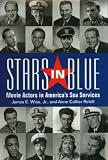
and Other Conflicts; James Arness: An Autobiography; Stars in Blue: Movie Actors in America's Sea Service; Sailors'
Journey into War; The Navy Cross: Extraordinary Heroism in Iraq, Afghanistan and Other Conflicts; Soldiers Lost at Sea: A
Chronicle of Troopship Disasters in Wartime; Silver Star: Navy and Marine Corps Gallantry in Iraq, Afghanistan and Other Conflicts;
Stars in the Corps: Movie Actors in the United States Marines; Stars in Khaki: Movie Actors in the Army and the Air Services;
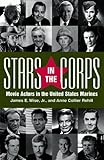
International Stars at War; and, Women at War: Iraq, Afghanistan, and Other Conflicts. According to the book description of International Stars at War,
“The last in a popular series on movie stars in the military, this handsome book provides readers with a guide to film
actors of many nations who served in various branches of their own military forces. Because they appeared in Hollywood movies,
many of these figures will be familiar to Americans. A few even won Oscars. Others worked closer to home but are still readily recognizable. Most
of them date their service to World War II, and the preponderance is British. Among the more than sixty stars featured are
the British actors Richard Attenborough, Richard Burton, Michael Caine, Royal Navy gunner Sean Connery, Alex Guinness, Rex
Harrison, Anthony Hopkins (who spent a year with the Royal Artillery during the Cold War), Ray Milland, Roger Moore (a first
lieutenant with the Royal Army in occupied West Germany after World War II), David Niven, Michael Rennie, and Peter Ustinov.
Those from Canada include Lorne Greene, Raymond Massey, and Walter Pidgeon. The Frenchmen include Maurice Chevalier and Charles
Boyer. Also featured are Laurence Harvey of South Africa, Peter Finch of Australia, Oskar Werner of Germany, Toshiro Mifune
of Japan, and Audrey Hepburn, who as a child was a courier for World War II resistance fighters in Holland. While the book focuses on the stars'
military experiences, it also provides information about their earlier lives and screen careers after their service. Like
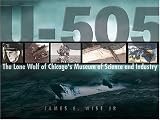
the other books in the series, it will have wide appeal.” According to the book description of U-505: The Final Journey,
“On 4 June 1944 the German submarine U-505 became the first man-of-war captured by the U.S. Navy in battle on the high
seas since the War of 1812. Attacked by the American hunter-killer force Task Group 22.3 off the coast of West Africa, the
750-ton U-boat was forced to the surface after a fierce bombardment. Abandoned by the crew while partially afloat, it was
boarded by American sailors and secretly towed to Bermuda. Renamed USS Nemo, it made a war bond subscription tour before docking
to await scrapping. The book offers a vivid description of these events and continues the story by explaining how U-505 became
a major attraction at the Museum of Science and Industry in Chicago. Author Jim Wise tells of the efforts of Dan Gallery, the commander of Task Group
22.3, to convince the Navy to transfer U-505’s ownership to the museum in his native Chicago. Wise chronicles the boat’s
arduous journey down the St. Lawrence River and across three Great Lakes to the shores of Lake Michigan for restoration. He
then offers a memorable description of the staggering engineering feat that moved the boat overland to an outdoor exhibit
area at the museum, where it was opened to the public in 1954. By the turn of the century, museum executives determined that
nearly fifty years of exposure to the elements and more than 24 million visitors had taken their toll. They raised millions
of dollars to restore the U-boat and build an indoor site four stories below ground that the author calls an architectural
wonder. In addition to the fully restored boat, there is an exhibit area filled with artifacts and interactive stations to
give visitors a taste of what it was like for the crewmen in battle. Some two hundred photographs of the U-boat and exhibit
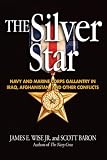
are included in the book.” According to the book description of Silver Star: Navy and Marine Corps Gallantry in Iraq, Afghanistan
and Other Conflicts, “The authors have compiled this stirring collection of profiles in courage to honor
the Sailors and Marines awarded the Silver Star by the U.S. Navy while serving in Iraq and Afghanistan. It documents the extraordinary,
award-winning actions of young American men in the war against global terrorism. A companion volume to The Navy Cross (Naval
Institute Press, 2007), this book also includes selected profiles of Silver Star recipients from previous wars whose stories
stand out as the best among an elite group. It is the first book to recognize and preserve for future generations the selfless
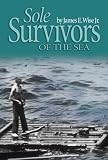
dedication shown by Silver Star medalists in their fight for freedom.” According to the book description of Sole Survivors of the Sea,
“The incredible stories of twenty-two lone survivors of maritime disasters are presented in this collection of war and
peacetime incidents. The dramatic accounts--including those of a British sailor who survived 133 days at sea on an open raft
and a German sailor who spent 28 hours in the ocean without a life preserver--are based on a wide array of sources, including
interviews with the survivors and their families and official records to back up their accuracy. Most took place in World
War II, when the navies and merchant fleets of many nations roamed the seas. Each story is one of boundless courage, a tenacious
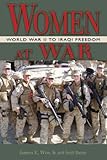
will to survive, and, in many cases, good luck.” According to the book description
of Women at War: Iraq, Afghanistan, and Other Conflicts, “Today, women in all U.S. military
services are involved in the war in Iraq and Afghanistan. They serve as pilots and crewmen of assault helicopters, bombers,
fighters, and transport planes, and are frequently engaged in firefights with enemy insurgents while guarding convoys, traveling
in hostile territory. They perform pat down searches of Arab women at checkpoints, carry out military police duties, and serve
aboard Navy and U.S. Coast Guard ships at sea. Like their male counterparts, they carry out their missions with determination
and great courage. The advent of the insurgency war, which has no rear or front lines, has made the debate regarding women
in combat irrelevant. In such a war zone anyone can be killed or injured at any moment. The stories of these courageous women are told here by James E. Wise and Scott
Baron, who use a format similar to the one employed with such success in the book Stars in Blue. The profiles of some thirty
women and their photographs are included. To record their stories, the authors conducted numerous personal interviews, and utilized numerous oral history interviews
conducted by staff at The Women’s Memorial, located in Arlington, Virginia. In every case Wise and Baron were struck
by the women’s extraordinary display of dedication to their mission and to the soldiers and sailors with whom they served.
Because the service of women in the military has been under reported to date, most of the women profiled here will be unknown
to readers and reveal another dimension to the service of women in the desert and the vital role they play in the armed forces.
While the book’s focus is on today’s women in combat, it also reaches back to Vietnam, Korea, and World War II
to offer selected stories of inspiring women who served at the "cusp of the spear" as they fought and died for their
country.”
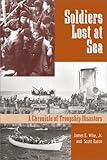
According to the book description,
Soldiers Lost at Sea: A Chronicle of Troopship Disasters in Wartime, “Heroism, tragedy, devotion
to duty, and scandal are just a few of the ingredients that make up this dramatic first-time account of troopship losses in
wartime. International in scope, it offers a compilation of stories about historic troopship disasters caused by torpedoes,
aerial attacks, mines, surface fire, foul weather, friendly fire, and poor planning by military decision makers. Some are
well known, like the explosion of the steamship Sultana on the Mississippi while transporting 2,000 Union soldiers home from
Confederate prisons. Others, like the June 1945 sinking of the Japanese cruiser Ashigara by a British submarine that resulted
in the loss of 800 Japanese soldiers, are little known. An extraordinary few far surpass the authors' criteria for selection
of disasters with high troop loss and the involvement of heroic acts. Among the most memorable is the 1851 sinking of the
British frigate Birkenhead with some 600 soldiers and their wives and children aboard. Lacking sufficient lifeboats, the men
stood steady in their ranks on deck as the ship went down. Board of Inquiry hearings, action reports, survivor debriefings, and personal correspondence collected
from archives in Germany, Italy, Russia, Australia, Britain, and the United States tell the story of some fifty vessels that
went down. Many of these disasters, the authors explain, were kept secret for decades. An introductory chapter provides an
overview of troop losses at sea beginning with the age of galley warfare, but the majority of the book focuses on losses of
World War II Allied and Axis ships followed by incidents from the nineteenth and early twentieth centuries.”
|
|
 |
|
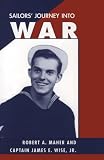
According to Booklist, Sailors'
Journey into War, “Maher and Wise tell a fairly common story, that of the U.S. citizen-sailor in World
War II, exceptionally well, with dry wit, great frankness about the limitations of Maher (its subject), his shipmates, and
his officers, and much invaluable detail about the pains and pleasures of wartime navy shipboard life. They also tell the
story of the U.S. destroyer Borie, one of scores of antique World War I vintage "four-pipers" that were pressed
into service to battle U-boats up and down the coast of the Americas, from New England to Brazil. With Maher part of her fire-control
party, Borie eventually joined the Battle of the Atlantic and fought desperately with a U-boat. She sank the sub, in the process
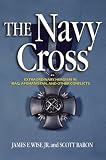
suffering fatal damage and losing 27 of the crew. A modest but exceptionally valuable World War II naval memoir.” According to the book description of The
Navy Cross: Extraordinary Heroism in Iraq, Afghanistan and Other Conflicts, “This collection of profiles
in courage highlights the Sailors and Marines awarded the U.S. Navy's highest honor for valor, the Navy Cross. It is the
first book to focus on the stories of those recognized for their heroic actions while serving in Iraq and Afghanistan--twenty-one
in all, including a Marine sergeant who received his Cross on 19 January 2007. Unknown to most, they have been honored for
putting their lives on the line to save others. The book also includes selected profiles of Navy Cross recipients from previous
wars whose stories stand out as the best among an elite group. Coauthors James E. Wise and Scott Baron, whose previous collaboration
cited exceptional women at war, wrote this book to call attention to those who have done extraordinary things to ensure the
freedom of future generations of Americans. The descriptions of bravery read like the scripts of Hollywood action films, but these are actual events about real
people. Readers will be awestruck by the incredible courage shown by the Marines and Sailors during hellish firefights against
the insurgents in Baghdad, Nasiriyah, Fallujah, Mazar-i-Sharif, and Kandahar. Yet the recipients remain modest about their
actions, saying they were merely doing their duty as would any other Marine or Sailor. Among the recent Navy Cross recipients
included are Chief Petty Officers Stephen Bass and Britt Slabinski, both Navy SEALs, and the "Fallujah Seven" Marines:
Capt. Brent Morel, Sgt. Willie L. Copeland III, 1st Sgt. Bradley Kasal, Sgt. Robert J. Mitchell, Cpl. Jeremiah Workman, Sgt.
Jarrett Kraft, and Lance Cpl. Dominic D. Esquibel.”
|
|
|
|
|