|
Major General Robert H. Scales Jr.,
USA (ret.) served over thirty years in the Army. He “commanded two units in Vietnam, winning the
Silver Star for action during the battles around Dong Ap Bia (Hamburger Hill) during the summer of 1969. Subsequently, he
served in command and staff positions in the United States, Germany, and Korea and ended his military career as Commandant
of the United States Army War College. In 1995 he created the Army After Next program which was the Army’s first attempt to build a strategic
game and operational concept for future land warfare. He is a graduate of West Point and earned his PhD in history from Duke
University.” Major
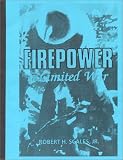
General Robert H. Scales is the author of: Certain Victory: The United States Army in the Gulf War; Firepower
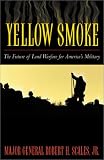
in Limited War; and, Yellow Smoke: The Future of Land Warfare for America's Military. He
is also a co-author of The Iraq War: A Military History.
Publisher’s Weekly said of The
Iraq War: A Military History, “The practice of "embedding" journalists in combat units provided
a good deal of spectacular, timely footage, but tended to restrict insight to the frontline perspective of riflemen and vehicle
crews. Murray and Scales provide a lucid and leavened look at the larger-scale forces shaping the war. Murray (A War to Be
Won), currently a fellow at the Institute of Defense Analysis, is an eminent military historian, and Scales (Yellow Smoke),
a retired major general and former commandant of the Army War College, is a familiar commentator on security issues. In this
operational history, they eschew discussion of such abstractions as whether the war was a "revolution in military affairs."
Instead, they show how, since the Gulf War of 1991, each of the services (army, air force, navy and marines) improved its
mastery of the craft of war: individually integrating technology, training, and doctrine while at the same time cultivating
a "jointness" that eroded, if it did not quite eliminate, traditional rivalries at the operational level. The result,
they argue, was a virtuoso performance in 2003 that did not depend on Iraqi ineffectiveness, a model exercise in maneuver
warfare at the operational level that stands comparison with any large-scale operation in terms of effectiveness and economy.
The authors complement their work with competent surveys of Iraq's history and of how the U.S. armed forces recovered
from the Vietnam debacle, and with an excellent appendix describing the weapons systems that dominated America's television
screens. While the short duration of the war's main push-three weeks from start to finish-works against systematic analysis,
and there will be much more material to surface and be sifted in the coming years, Murray and Scales set the standard for
future works.”
The MOAA said of Yellow
Smoke: The Future of Land Warfare for America's Military, “Scales draws upon his distinguished military
career to provide the codification of a new and uniquely American way of fighting limited wars. Because war remains as much
art as science, he shows what to expect if we substitute science and technology with the understanding of history and humanity.
Through experiences in every active conflict since Korea, Scales describes and clarifies the nature and character of the limited
war environment that the U.S. armed forces will face in coming decades. He identifies lessons and insights from our recent
experience with limited wars to demonstrate how the past can tell us a great deal about the future.”
|
|
 |
|
One reader of Firepower
in Limited War said, “MGen. Scales provides the world with a fascinating study of man's recent relationship
to technology. I enjoyed the book and wrote many things in the margins. MGen. Scales shows how firepower was used and countered
in the French and U.S. tials in Viet Nam, during the Soviet occupation of Afghanistan, during British actions on the Flaklands
and through U.S. Army/Air Force combined operations against Iraq. Not dry or technical, this book weaves the moral aspect
of war with the effects of artillery, naval and air-delivered munitions in a manner which would be clear to both the civilian
and military professional. A great book for those involved in America's national and military strategy or foreign policy,
for it illustrates what firepower has and hasn't been recently able to contribute to the foreign policies of France, the
Soviet Union, Great Britain and the U.S. Invaluable to those seeking to understand why technology rarely triumphs over human
will on the battlefield. I also recommend it to the casual reader interested in modern military history--MGen Scales fills
his tactical discussions with stories of human interest from all sides of these conflicts. His discussion on Iraq, for instance,
opens with a dramatic story from an Iraqi artillery leader about his experience at the receiving end of American firepower.
My only disappointment is that his discussion of the Iraq war focuses on the U.S. Army and Air Force and to a point that almost
discredits the contributions of the U.S. Marine Corps and Navy and the Coalition. Nonetheless, a worthwhile expenditure and
a fine book to keep on the shelf.”
According to the book description of
Certain Victory: The U.S. Army in the Gulf War, “The official U.S. Army account of Army performance
in the Gulf War, Certain Victory was originally published by the Office of the Chief of Staff, U.S. Army, in 1993. Brig. Gen.
Scales, who headed the Army's Desert Storm Study Project, offers a highly readable and abundantly illustrated chronicle.”
|
|
|
|
|