|
Colonel Richard Morgan Szybist,
USA (ret.) "was born in Perth
Amboy, NJ in 1942. He attended public
schools there and in Sayreville NJ. He
graduated from Rutgers University with
a Sociology B.A. in 1964 and entered
military service through the Reserve
Officers Training Program (ROTC). He
began writing for national military
journals during a 24-year U.S. Army
career that spanned peacetime duty in
Europe, combat duty in Vietnam, and a
range of assignments in the U.S. and
Europe During that time he earned an
Education M.A. at Seton Hall
University. His résumes for the period
includes teaching posts at Rutgers
University and Seton Hall University
and field work for the Army Chief of
Staff in the Pentagon, Washington,
D.C..
Morgan left the military in 1988 and
moved to Tucson, AZ where he completed
graduate studies in Latin American
affairs at the University of Arizona (UA),
with a focus on the histories and
cultures of Mexico and Central
America. While there, he wrote
grant-sponsored curriculum materials
to support high school social studies
teaching about Mexico.
Afterwards, he taught Latin American
studies in the undergraduate program
at Pima County College (PCC) and
guided cross-border tours into Mexico
for the PCC and Cochise Count College
Adult Education Programs. He wrote
articles on the U.S.– Mexico frontier
for regional publications and
undertook research for his first book,
A Guide to Historic Missions &
Churches of the Arizona—Sonora
Borderlands. This book, published in
1995, was acclaimed by the Arizona
Daily Star as one of the year’s best
books on the U.S. Southwest.
Morgan moved to Lake Atitlan,
Guatemala in 1998, where he has since
focused on the history and cultural
diversity of the Lake Basin. He has
written numerous articles on Atitlan,
published in REVUE magazine,
Guatemala’s English language tourism
monthly and three books on Lake
Atitlan under the name of Richard
Morgan Szybist. These books form a
trilogy which collectively treat the
natural and cultural history of
Atitlan, fables and folktales of its
Mayan inhabitants, and natural
healing, with an emphasis on Mayan
shamanism.
Morgan owns and operates Aventuras en
Educación, S.A., an organization which
specializes in private and small group
eco and cultural tours. His activities
are conducted from his center in
Panajachel, Los Encuentros Posada y
Centro Cultural. "
Colonel Richard Morgan Szybist is the author of The Lake Atitlan Reference
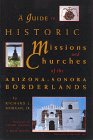
Guide: The Definitive Eco-Cultural Guidebook on Lake Atitlan, A Guide to Historic Missions and Churches of the Arizona-Sonora
Borderlands and Hitchhiking
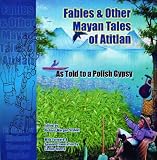
on America's War Machine - 1964-88. He is also the editor of Fables & Other Mayan Tales of Atitlan.
According to the book description of
The Lake Atitlan Reference Guide: The Definitive Eco-Cultural Guidebook on Lake Atitlan, “The
Lake Atitlan Reference Guide is an eco-cultural guide to the lake identified by Aldous Huxley (Brave New World) as "the
most beautiful lake in the world." Atitlan is a volcanic caldera, located at 5,000 ft above sea level in the Mayan highlands
of Guatemala. Atitlan means "at the water." It is a fusion of simple Nahuatl words that belies
the complexity of the entity it identifies.
Lake Atitlan is both a place and an
event in motion. Its life incorporates the visually stunning character of one of nature’s most ambitious creations and
the extraordinarily diverse cultural character of the human life that the Lake has drawn to its shores.
Atitlan was born violently, long ago,
probably before the emergence of man here. Scientists still debate the exact nature of its birth, an event which created a
nearly circular depression of 11 miles in diameter, 95 square miles of area, and over 1,000 feet deep. The cause of this huge
cavity, a chain of events which began with an immense eruption, produced a unique microenvironment that has been drawing wanderers
to the Lake’s shores for at least thousands of years. Cultures have clashed to control it. Vagabonds have been absorbed
by it, laid down roots, and quit "moving on." Traveling notables have been overwhelmed by its beauty and written
about it in the loftiest of terms.
Any effort to empirically order the
kaleidoscope of its elements is ultimately challenged by the spiritual and physical immensity of the subject. This work makes
no such attempt. What is offered here instead is a summary of the Lake environment in terms of its physical location and nature,
its cultural history, and its contemporary political and socioeconomic life. The text is supported by more than 100 quality
fotos (most in color) and a variety of other illustrations.”
|
|
 |
|
|
|
|
According to the book description of
Fables & Other Mayan Tales of Atitlan, “This is a collection of 12 folktales from the various Mayan
communities around the shoreline of Lake Atitlan, located in the highlands of Guatemala. This edition is bilingual English-Spanish
and, beyond entertainment, incorporates ethnographic and geographical descriptive information about the environment and Mayan
culture in the rural highlands of Guatemala.”
According to the book description of
A Guide to Historic Missions and Churches of the Arizona-Sonora Borderlands, “This guide provides
a comprehensive presentation of the missions constructed by Jesuits and Franciscans in a region colonized by Spain and since
divided between the United States and Mexico. It provides an historical synopsis of the period, a description of the physical
and cultural characters of the region at the time of the missionaries' arrival and an explanation of the architectural
features incorporated into the construction of their temples. Color photographs portray each of the churches as they look
today.”
|
|