|
Colonel Otis Hays, Jr., USA (ret.)
is the author of Alaska’s Hidden Wars: Secret Campaigns on the North Pacific Rim; The Alaska-Siberia Connection:
The World War II Air Route; and, Home from Serbia; the Secret Odysseys of Interned American Airmen in World War II.
The Air and Space Power Journal said
of The Alaska-Siberia Connection: The World War II Air Route, “The US-Soviet lend-lease program
during the Second World War is generally well known, particularly use of the sea route via the North Atlantic Ocean and the
sea-land route through the Persian Gulf region. Desperate to acquire military aircraft of all types to make up for heavy losses
inflicted by Germany, the Soviet Union reluctantly agreed to accept planes and other critical equipment from its Allies. The
Soviets were uneasy about the whole arrangement but had no other choice.
Timeliness of deliveries was a big
problem. The approved transportation routes for American-made aircraft often took weeks and even months to complete—if
they arrived at all. Early in the war, attrition of transport ships in convoys was high. So begins,
albeit delayed by Red suspicion and red tape, an unusual tale of the war—the “officially secret” establishment
and running of an air linkage between Alaska and Siberia for lend-lease aircraft. Otis Hays Jr., author of The Alaska-Siberia
Connection, knows the subject well. In 1943–44, Hays served as a senior member of the Alaska Defense Command’s
military intelligence staff and foreign liaison operations.”
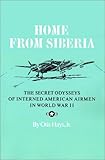
According to one reader of Home
from Serbia; the Secret Odysseys of Interned American Airmen in World War II, “The alleged presence of
American soldiers from Korea, Vietnam and the Cold War in the gulag is a subject that is being actively investigated by many
agencies, both government and private. Hays' research serves as an important base document in the analysis, and shows
that the Soviets were quite capable of conducting such operations.
Home From Siberia's strength is
the thoroughness in which the American fliers are chronicled. Hays shows the fates of each crew member, using maps, pictures
and interviews with the survivors to paint a picture in a clear and fascinating manner. His work fills in a historical gap,
and covers previously uncharted ground. The book's weakness is the lack of foreign sources. Hays uses mostly US sources,
and should consider writing an updated edition now that many Soviet documents have been declassified and access to archives
is more open. An analysis of Japanese diplomatic and intelligence documents would be an important addition as well, because
they may indicate how successful the Soviets were in maintaining the secrecy of the operation. Home From Siberia is an important
work, and a welcome addition to the history of World War II.”
|
|
 |
|
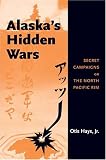
The MOAA said of Alaska’s Hidden
Wars: Secret Campaigns on the North Pacific Rim, “On the eve of World War II, the national interests of
Japan, the United States, and the Soviet Union collided in the North Pacific. Alaska’s Hidden Wars
tells the story of the war in the North Pacific—a story of savage weather, isolation, and sacrifice. Two island chains—the
Aleutians and the Kuriles—became the focus of a series of major campaigns that pitted the Americans against the Japanese.
Alaska’s Hidden Wars chronicles the role of Japanese-American intelligence specialists and reveals a Japanese eyewitness
account of the defense of Attu. Two virtually unknown aspects of the North Pacific war are also exposed: the brutal North
Pacific weather and the imprisonment of American airmen in Kamchatka.
In 1942, the Japanese raided Dutch
Harbor in the Aleutian Islands and occupied the islands of Kiska and Attu. The Americans mounted a vigorous campaign, and
the Japanese retreated to the Kuriles. For the next two years, the Americans launched air raids and fleet bombardments, while
American soldiers maintained lonely outposts along Aleutian coasts. But in 1945, when Japan finally surrendered, the Kuriles
were taken—not by the waiting Americans, but by the Soviets.
Alaska’s Hidden Wars is a fast-moving
history that brings declassified archival sources to light and draws the reader into the lonely, bitter war fought in the
North Pacific.”
|
|
|
|
|