|
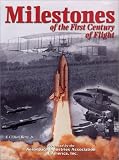
According to the book description
of Milestones of the First Century of Flight, “The history of human flight, both within and
outside Earth's atmosphere, is rich with remarkable achievements. From the vision of aviation pioneers, designers and
engineers, financial backers, and government agencies, an entirely new field of science and technology was created, with an
unprecedented impact on the world's population. In celebration of the 100th anniversary of the Wright Brothers’
1903 flight, Milestones of the First Century of Flight chronicles the 100 most significant achievements in aviation, with
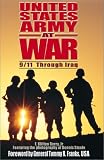
more than 200 black-and-white and color photos.” Booklist said of United States Army at War: 9/11 through Iraq, “This lavishly illustrated
volume covers the U.S. Army's work since 9/11 in segments. The first embraces the immediate aftermath of 9/11. The second
concerns the deployment to Afghanistan and overthrow of the Taliban. In conclusion, Berry and Steele follow Operation Iraqi
Freedom from the buildup in Kuwait through the actual conduct of the action to the early stages of occupation. An appendix
contains a brief, photographic directory of some equipment the army took into battle. The text is almost cursory, and it should
surprise no one that it is pro-army and pro-war. The illustrations--all color photographs--constitute the book's greatest
strength, for they cover a variety of equipment and American and Allied personnel, particularly in logistics, that the general
media have given scant notice; and they allow one to draw conclusions on broader issues based on such shots as that of a female
soldier hefting a sandbag. An unabashed visual salute to the army's work in the recent conflicts.”
|
|
 |
|
F. Clifton Berry, Jr., an Army veteran who saw combat in Vietnam. F. Clifton Berry received a direct
Regular Army commission in Infantry while serving in the 82d Airborne Division. He saw combat in Vietnam as operations officer
of a light infantry brigade. He commanded two rifle companies and an Infantry battalion during active service. F. Clifton
Berry also served in the Office of the Assistant Secretary of Defense (Public Affairs), on the staff of a presidential commission
and at the Department of State. F.
Clifton Berry earned a Bachelor's in Mathematics at George Washington University and a Master's in Communication at
Stanford University while on active duty as an Infantry officer in the U.S. Army. He has edited Air Force magazine, been the
chief U.S. editor of Interavia Publications; and, edited Air Power History and National Defense magazine. In
addition to being a member of the Authors Guild of America, he is a master parachutist and private pilot with land and seaplane
ratings. F. Clifton Berry is the author of
United States Army at War: 9/11 through Iraq; Sky Soldiers: The Illustrated History of the Vietnam War; AIR CAV
(Illustrated History of the Vietnam War, Vol. 17): CHARGERS #12 (Illustrated History of the Vietnam War, Vol. 12); GADGET
WARFARE #14 (Illustrated History of the Vietnam War, Vol. 14); STRIKE AIRCRAFT #9 (Illustrated History of the Vietnam War,
Vol. 9); Inside the CIA: Architecture, Art & Atmosphere of America's Premiere Intelligence Agency; and, Inventing
the Future: How Science and Technology Transform Our World; Milestones of the First Century of Flight. F.
Clifton Berry is also the co-author of Medics at War: Military Medicine from Colonial Times to the 21st Century;
CNN War in the Gulf; Flights: American Aerospace...Beginning to Future; and, War in the Gulf from the Invasion of Kuwait to
the Day of Victory and Beyond.”
According to the book description
Medics at War: Military Medicine from Colonial Times to the 21st Century, is “Filled with
more than 150 color and black-and-white illustrations, this handsome large-format book celebrates frontline medical personnel
and the critical role they have played in the success of U.S. armed forces, from the battles of Lexington and Concord in colonial
times to the recent battles in Iraq and Afghanistan. The narrative and photographs cover all the links in the military medical
chain, beginning with ensuring good health for individual service members to caring for combat casualties and seeing to their
return to health. The book focuses on individual medics
who serve with frontline units saving lives and moving casualties from the battle to definitive medical care. Readers accompany
the medics and their patients from aid stations to combat support hospitals and air transportable hospitals to hospital ships
and high-level medical centers. From horse-drawn ambulances to today’s advanced medevac helicopters and aeromedical
evacuation airplanes, the means of evacuating casualties from the battle has evolved dramatically, but the intent remains
unchanged. Other important elements this book calls attention to are the military medical innovations that have improved the
health of the armed forces—and the civilian population as well. This book is published with the cooperation of the Association
of the United States Army.”
One reader of CNN
War in the Gulf said, “After offering an unprecedented amount of live coverage of the first Gulf War,
Cable Network News (CNN) commissioned Thomas Allen, Clifton Berry, and Norman Polmar to write a hasty history immediately
following the conclusion of combat in 1991. The result is "War in the Gulf', a first take that has both the sense
of immediacy and the shortcomings of being too close in time to the described event. The authors, all experienced in defense affairs, had access to the large volume of reporting
conducted by CNN between August 1990 and February 1991. As is common for current news, this reporting was typically incomplete
and lacked perspective. That said, "War in the Gulf" provides a good running commentary about the preparation and
conduct of Operations DESERT SHIELD and DESERT STORM. It comes with a healthy collection of photographs and graphics that
help illuminate the conflict for the general reader. Its best use may be as a capture of what was understood at the time about
the First Gulf War.”
|
|
|
|
|