|
Colonel Cole C. Kingseed, USA (ret.)
is Professor Emeritus of History at the United States Military Academy, West Point. He is the author of Eisenhower
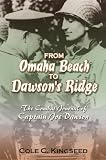
and the Suez Crisis of 1956, From Omaha Beach to Dawson’s Ridge: The Combat Journal of Captain
Joe Dawson, Old Glory Stories: American Combat Leadership in World War II, and the Civil War. .
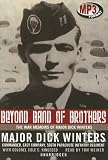
He is the co-author of Beyond Band of Brothers: The War Memoirs of Major Dick Winters.
According to the book description
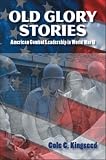
of Old Glory Stories: American Combat Leadership in World War II, “Saying that no generation
of Americans has produced a finer array of combat commanders than that of World War II, a thirty-year army veteran examines
combat leadership throughout the war at every level of command in the U.S. Army. The author argues that although Army chief
of staff George C. Marshall’s organization and training policies were indispensable, the ultimate victory was the result
of spirited leadership and the undaunted courage of those who served, from individual riflemen to the upper echelons of army
command. Rather than a history of battles
and campaigns, this book is an analysis of leadership in combat over three continents and across two oceans. It looks at how
soldiers react in war -- how sergeants, lieutenants, captains, and generals direct soldiers in the most intense of all human
dramas. The first part focuses on the generals and takes a thematic approach, examining such topics as restoring the fighting
spirit and analyzing the unique characteristics required to command special units in combat. The second part examines a special
breed of junior leaders who fought the German and Japanese armies on the front lines and whose contributions merit attention.
Like war correspondent Ernie Pyle, Kingseed includes both the big and the little to offer a balanced view of what makes a
good combat leader.”
According to the book description of
From Omaha Beach to Dawson's Ridge: The Combat Journal of Captain Joe Dawson, “An infantry
company commander in the U.S. Army’s heralded 1st Infantry Division, Dawson led his men through some of the most brutal
battles of World War II. From the invasion of North Africa in late 1942 through Sicily and the assault on Normandy to the
push toward the German frontier late in 1944, Dawson’s length of service on the front lines was extraordinary and his
heroism while holding off the Germans on a ridge near Aachen, Germany, is legendary. Based on Dawson’s own combat journal,
this book focuses on leadership in combat during the greatest human drama of the 20th century.”
According to the book description of
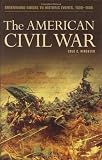
the Civil War, “The Civil War is the central event in U.S. history. More than any other event,
the war defined the United States as a nation and as a people. What the United States is today, how it views the role of its
national government in its daily life, how it interprets its relations within its diverse population, and how it has evolved
as a world power are largely the results of the cataclysmic struggle that shook the American republic in the mid-19th century.
For better or worse, the irrepressible conflict that gripped the United States nearly 150 years ago has also formed its national
character. Kingseed gives a thoroughly readable, learned overview of the Civil War before offering stimulating chapters on
the Myth of Southern Martial Superiority, The Transformation of Abraham Lincoln, Could the South Have Won the War?, Anatomy
of Defeat: Why Lee Lost the Battle of Gettysburg, and finally, Consequences of the War: A Contemporary Perspective. Eighteen
biographical sketches of key civilian, military, and political figures such as Clara Barton, Matthew Brady, J.E.B. Stuart,
Ulysses S. Grant, and Frederick Douglass personalize the momentous events of the Civil War, while 16 annotated primary documents,
ranging from Lincoln's "House Divided against Itself Speech" to Jefferson Davis's Inagural Speech on his
swearing in as the first, and last, President of the C.S.A., to a bluejacket's remembrances of the horrors witnessed during
and after the Battle of Antietam. Ten illustrations, a map of the major campaigns, chronology of events, glossary, annotated
bibliography, and index complete this one-stop research resource on the American Civil War.”
|
|
 |
|
According to a reader of
From Omaha Beach to Dawson's Ridge: The Combat Journal of Captain Joe Dawson, “Capt. Dawson
was was the company CO of G Company, 2nd Battalion, 16th Regimental Combat Team, of the Big Red One. He went into Omaha Beach
at H-Hour, D-Day. He was the first off of his LCVP, followed by his communications sergeant and his company clerk. Then an
artillery shell struck the boat, wiping out the remaining thirty-three men. That was Omaha. Of course they didn't land where they intended, but
began the war where they landed. They were among the first ashore, among the first to move off the beach, among the first
to scale the ridge behind the beach and start cleaning out the German defenders firing down on the beach. They fought across
France and into Germany. Five
months later Company G spent thirty nine days defending a ridge along the outskirts of Eilendorf, Germany that has gone down
in the history of the Big Red One as Dawson's Ridge. This book was put together by Col. CC Kingseed,
former chief of military history at West Point, from the letters Capt. Dawson wrote home. It is a tale of the very best of
small unit leadership.”
Booklist said of Beyond
Band of Brothers: The War Memoirs of Major Dick Winters, “Stephen Ambrose's Band of Brothers (1992)
and the HBO miniseries based on it made Easy Company--the 506th Parachute Infantry Regiment, which fought from D-Day to the
end of World War II, with 150 percent casualties--well known to more than -military-history buffs. After both publication
and broadcast, Winters, Easy Company's commanding officer, received many requests for more information. Feeling that much
of the material Ambrose didn't use deserved an audience, he chose to air it and satisfy all those requests in his memoirs.
For those to whom the story is familiar, the major and his collaborator developed an excellent narrative voice to recount
Winters' experiences, actions, and thoughts during everything from training to deployment to battle to subsequent occupation.
Winters has been praised as an exemplar of leadership, and here he shows what he did to earn that praise and how he did it.
Very well done, book as well as war service.”
|
|
|
|
|