Charles "Chuck" Sennewald, upon graduation from the United States Air Force basic training program
at Lackland AFB in 1949, entered and graduated from the Untied States Army's Military Police School at Camp Gordon (Georgia).
Shortly thereafter he was transferred to the 6205th Air Police Group at Clark AFB in the Philippine Islands, then the
largest Air Police contingent in the world on the largest air base in the world. He served in the prestigious Town Patrol
detail in Angeles, Pampanga. He volunteered for Korean service after the outbreak of that war and was eventually
transferred to the 18th Air Police Squadron with the 18th Fighter Bomber Wing at K-10 Korea, the famous "Dogpatch"
for Mustang F-51's. At that location he became the Prison Sergeant in charge of the base stockade.
Upon rotation back to
the United States after 2 years overseas duty he was assigned to the 10th Air Force Train Rider Detachment and patrolled Union
Pacific passenger between Ogden, Utah and Omaha, Nebraska, monitoring and controlling servicemen of all branches traveling
to and returning from the Korean conflict.
After discharge from the Air Force Chuck, entered San Jose State University (California),
majoring in Police Science. He eventually graduated with a BS in Police Science and Administration from
California State University, Los Angeles, where he subsequently taught as a part time lecturer for 13 years, in Security Management.
While attending school he joined the Los Angeles County Sheriff's Department, and after a year in corrections and a
short stint in patrol at Malibu was transferred to the Vice Detail where he worked undercover for over 4 years.
He was then transferred to the Los Angeles County District Attorney's Bureau of Investigation and after a short tenure
there was recruited by the Claremont Colleges as their Chief of Campus Police.
He left campus
police work for the retail industry and rose to Director of Security for the Broadway Department Stores, the major division
of Carter Hawley Hales Stores, Inc., a conglomerate of stores then including such entities as Neiman Marcus.
In 1979 he became a
sole practitioner Security Management Consultant and has serviced a wide range of retailers across the country and in Mexico.
He founded the International Association of Professional Security Consultants (IAPSC) in 1984 and today enjoys semi-retirement.
His latest book, Retail Crime, Security and Loss Prevention: An Encyclopedic
Reference, co-authored with John Christman, former VP and Director of Security for Macy's West will be released
in February, 2008.
In addition to the book being released in February
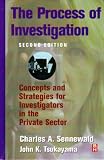
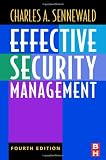
2008, Charles Sennewald is the author of six books: Effective Security Management; The Process of Investigation;
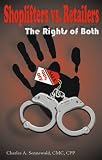
Security Consulting; Shoplifters vs. Retailers: The Rights of Both; Shoplifting: Managing the Problem; and, The Last Volkswagen.
According to the book description of The Process of Investigation, it “is a book written
to address the needs of the private investigator in the security field. Continuing in the tradition of its previous editions,
this book covers essential topics which are often overlooked in works that concentrate on the public aspects of investigation.
Investigative skills such as surveillance techniques, interviewing and interrogation, evidence, and confessions and written
statements are all discussed, and supplemented with updated case studies and examples from the authors own experiences.
Major revisions to The Process of Investigation include mention and coverage of the effects of 9/11 on the security industry,
the need to incorporate awareness of terrorism and terrorist activities when investigating any suspicious behavior, and two
completely new chapters. Chapter 10 discusses interviewing and interrogations, and is written by Doug Wicklander and Dave
Zulawski, premier experts in the field. Chapter 23 addresses the issues of workplace violence, and includes coverage of stalking,
domestic violence spillover into workplaces, red flags, and the Theory of Threat Assessment and Management (TAM), among other
topics. Additionally, other more minor modifications in legislation that have been passed and implemented since the last edition
are addressed throughout the book.”