|
Lieutenant Colonel Ralph Peters, USA
(ret.) “enlisted in the Army as a private in 1976, after graduation from Pennsylvania State University. He served with
1st Battalion - 46th Infantry Regiment, then part of the 1st Armored Division, and attained the rank of sergeant. He was commissioned
in 1980. He spent ten years in Germany working in military intelligence. After returning from Germany, Peters attended Officer
Candidate School and received a commission, eventually attending the Command and General Staff College, and still later graduated
from the U.S. Army War College, in Carlisle, Pennsylvania. His last assignment was to the Office of the Deputy Chief of Staff
for Intelligence. He retired in 1998 with the rank of Lieutenant Colonel.”
Lieutenant Colonel Ralph Peters
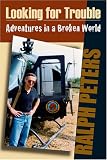
is the author of New Glory: Expanding America’s Global Supremacy; Looking For Trouble: Adventures in a Broken
World; Wars of Blood and Faith: The Conflicts That Will Shape the 21st Century; Never Quit the Fight; Traitor; The War in
2020; Flames of Heaven; The Devil's Garden; Beyond Terror: Strategy in a Changing World; Twilight of Heroes; Red
Army; The Perfect Soldier; and, Fighting for the Future: Will America Triumph?
Writing as Owen Parry, Lieutenant
Colonel Ralph Peters is the author of Rebels of Babylon; Honor's Kingdom; Bold Sons of Erin; Shadows of Glory;
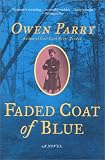
Our Simple Gifts: Civil War Christmas Tale; Faded Coat of Blue; Call Each River Jordan; and, Strike the Harp!: American Christmas
Stories.
One reader of Red Army
said, “I read this book when it first came out 12 years ago. I was working as a Battalion Intelligence operator at the
time and was comparing doctrine of the forces involved. One main difference is that the Soviets reinforce success, whereas
NATO would have to reinforce their weakest part of the line. A touted NATO advantage was their communications system that
would allow it to maneuver units more quickly, which may have been a false assumption. Of all the books I've read, this
is the best. Warfare is notoriously difficult to model, as small events may have
great importance. On the other hand, capabilities of equipment and units are accurately known and not likely to change much
in battle. While recognizing the differences in equipment and ways of employing it, Peters realizes that most professional
soldiers have common characteristics. Some leaders are daring and intuitive, some are not. Making sure they are employed in
the right spot is crucial, and again Peters shows that the Soviet professional development system is much like that of the
West.”
Booklist said of Call Each
River Jordan, “Dispatched to the battle-scarred ridges of Tennessee by President Abraham Lincoln, Federal
Agent Abel Jones endeavors to solve an exceedingly heinous crime steeped in racial hatred and teeming with biblical overtones.
When Union troops discover the brutal massacre of 40 runaway slaves, General Grant worries that abolitionists, endangering
the war effort at a particularly critical juncture, will politically exploit the slaughter. Commissioned as Grant's emissary,
Jones seeks safe passage across enemy lines to confer with Confederate commanders equally worried that publication of the
vile nature of the atrocities will weaken European support for their cause. Teaming up with an aristocratic Southern officer,
Jones must cross both physical and emotional borders in order to comprehend the shockingly twisted logic that prompted the
senseless bloodletting. In addition to expertly capturing the elegant cadence of Civil War-era dialogue, Parry has also authentically
evoked the horror, confusion, and chaos that characterized the conflict between the states. Realistically detailed, bristling
with intelligent suspense, and featuring a stoically introspective hero, this superb piece of period fiction will appeal to
both Civil War buffs and fans of historical mysteries.”
Publisher’s Weekly said of Faded
Coat of Blue, “A colorful, scrupulous and unassuming sleuth named Abel Jones is the protagonist of this
solid historical thriller set during the opening months of the Civil War. When a crusading abolitionist is found murdered
in 1861 in a Union encampment near Washington, Jones, a convalescing casualty of First Manassas, presently assigned to desk
duty, is tapped by the Union's newest general, George B. McClellan, to discover the killer and bring him to justice. Although
Jones is the most modest of men and a teetotaling Welsh immigrant, a Methodist and stout moralist and he's a veteran of
some of the bloodiest battles of the century, as a former solider in Britain's Indian army. Modeled on the best qualities
of such famous detectives as Hercule Poirot and Sherlock Holmes and with a little Miss Marple thrown in a Jones is small of
stature and hampered by an injured leg, but he is a courageous man and seeker of truth. Decrying injustice everywhere, from
child prostitution to military atrocities, the humble do-gooder proves a daunting foil for an assortment of villains, including
McClellan himself. The first-person narrative is infused with ingeniously authentic and varied period patois, artfully drawn
cameos and historical portraits. Whenever Jones issues a narrow assessment of people according to their national or racial
background, he does so in accordance with typical period attitudes and no revisionist political correctness here.. Sometimes
unwittingly funny, Jones's narrative voice is a feast of fine language and well-rendered dialectical precision. This splendid
novel whets the appetite for the promised next volume and the continuing adventures of the modest hero.”
Publisher’s Weekly said of Shadows
of Glory, “Second in Parry's praised Civil War series (after Faded Coat of Blue), this uncommonly
engaging historical drama, the second to feature Abel Jones a Union officer, reluctant detective, and loyal confidential agent
for President Lincoln a stirs the imagination with its vivid color, gripping suspense and wartime historical accuracy. In
the winter of 1862, Major Jones, an immigrant Welshman now in the Union Army, is sent to northern New York to investigate
rumors of an Irish insurrection among those who oppose the war. Two federal undercover agents have already been brutally murdered,
and Jones knows this will be a delicate and dangerous mission. He boldly sets out for the prosperous town of Penn Yan, N.Y.,
with no disguise or cover story, proclaiming to all that he is there to investigate the murders and the rumors of rebellion.
His presence is at once feared and welcomed, and he naturally becomes the target of the Irish troublemakers, members of a
group called Whiteboys. The Irish insurrection, however, is only the front for a larger operation, and Jones soon finds himself
in even deeper personal and professional danger. Aided by beautiful Nellie Kildare, who is either a madwoman or a mystic,
and thwarted by the manipulative man who passes as her father, Jones and his thieving and conniving friend, Jimmy Molloy,
uncover a plot that threatens to cripple the North. Jones is an endearing literary character who should gracefully weather
further sequels. He is a war hero who hates war almost as much as he hates horses, admits he does not understand women and
thinks the ancient Greeks were a bad sort. Bright but not brilliant, flawed but not troubled, Jones is an ordinary man with
an extraordinary sense of duty. Parry has created a thoroughly likable and believable character and engages him here in a
riveting adventure.”
Publisher’s Weekly said of New
Glory: Expanding America’s Global Supremacy, “In this lively but rarely incisive geo-political screed,
the battle lines are starkly drawn. On one side are Americans, who "are so successful, so powerful, so wealthy-and so
humane-that our very existence humiliates the failed and failing around the world," assisted by the other English-speaking
peoples and the promising regions of India, Africa and Latin America. Opposing us is the Islamic Middle East, a realm of "malevolence"
and "sickness of the soul," the global scourges of terrorism and corruption and, worst of all, France, a.k.a. "that
vicious child among nations," "the cancer at the heart of Europe," "a two-bit Soviet Union" and "poisonous
snake." America's success depends on "killing boldly when killing is required," but we must be careful
lest our ferocity be undermined by Pentagon "court eunuchs" who insist that war be cheap and bloodless. Ex-Army
intelligence officer Peters, author of Beyond Baghdad: Postmodern War and Peace, is a soldier-scholar who combines pitiless
martial aphorisms ("prove your victory by planting your flag in your dead enemy's eye socket") with impromptu
disquisitions on Renaissance art and the novels of Anthony Trollope. But his mixture of stoic verities, erudite allusion and
rabid overgeneralizations about national character hardly amounts to a consistent strategic vision. He wants America to champion
human rights, but also practice torture and assassination where necessary, and to ensure that our military operations inflict
the requisite "devastation" and "pain on the enemy population." His most substantive recommendation-that
America control the Indian Ocean's oil-shipping lanes-relies on the lazy assumption that trying to control Middle East
oil is a strategic imperative rather than a strategic blunder. Peters is a vigorous, pithy writer, but he lacks a clear conception
of America's global interests and capabilities.”
According to the book description of
Wars of Blood and Faith: The Conflicts That Will Shape the 21st Century, “In the no-holds-barred
tradition that has won him so many fans across the nation and around the world, best-selling author and strategist Ralph Peters
confronts the crucial security issues of our time--and the troubled times to come. With his trademark clarity and force, Peters
argues that we have left behind the Age of Ideologies to enter a violent period in which ethnicity and religion--blood and
faith--will continue to be the source of ferocious rebellions, genocide, and global terrorism. His compelling vision spares
neither our foreign policy nor our domestic follies as he ruthlessly outlines what it will take to protect our country against
this new breed of enemies:
According to the book description of
Never Quit the Fight, “Drawing on his global experiences from Africa to Iraq, author Ralph
Peters attacks today s crucial issues of our time head-on, with the clear eye and blunt voice that has won him a devoted following:
Is Iraq worth it? What s the truth behind the politics? Are our defense dollars buying a strong military--or the wrong military?
Are we missing great opportunities elsewhere while hypnotized by the Middle East? Must we accept that Islam itself is the
problem? Will we face a war with China? What would such a war mean? Can Washington learn from its mistakes?
These are just a few of the controversial issues Peters takes on in a series of body blows to the status quo. Famed as the
most original strategist of our time.”
We have forgotten what it takes to
win wars, leading to tragic, unnecessary failures; Too many Americans still refuse to take our enemies seriously, even though
terrorists and foreign leaders are bent on inflicting apocalyptic destruction on us; Those enemies will use nuclear weapons,
if allowed to possess them; Religious wars are impossible to prevent--because our enemies desire them; The Middle East is
headed for greater chaos, and Israel may not survive; Civilized approaches to combat no longer work; and, Pop bestsellers
have read globalization exactly wrong--it s leading the world to divisive crises of identity, not greater unity.
Despite these challenges, the United
States will remain the world s most-successful and greatest power--but the cost will be determined by our willingness to face
a new century s brutal realities. Wars of Blood and Faith continues the ever-popular series of works by Ralph Peters on strategy,
conflict, and the military published by Stackpole Books--titles that have not only excited and informed a wide range of readers,
but which have profoundly influenced our national security.”
Publisher’s Weekly said of Rebels
of Babylon, “The intrepid Maj. Abel Jones, special agent to the Federal Army, takes on New Orleans in
this satisfying sixth installment to Parry's humorous, well-written and meticulously researched series of Civil War mysteries.
Dispatched to investigate the murder of a Northern heiress–cum–crusading abolitionist, our reluctant hero finds
that despite the bitter cold of the winter of 1863, "New Orleans burns torrid." On his incredible first day in the
Crescent City, Jones gives chase to a voodoo woman and survives kidnapping, being buried alive, a midnight gunfight, a venomous
snake and paralysis by a poison charm. This is just business as usual for the puritanical Welshman, who fearlessly forges
ahead with the assistance of Barnaby B. Barnaby, the rotund former haberdasher from earlier Abel Jones novels. While the rollicking
plot pulls the reader along, Parry also sheds new light on Jones's character, juxtaposing his ardent Methodism against
an exotic Francophone city and its outré denizens. Jones holds firm to his strict ethics and disapproval of others'
sinful folly—as well as everything not Welsh—but learns a slightly more pragmatic approach in the face of certain
New Orleans realities and superstitions. Though references to previous adventures may perplex newcomers to the series, all
will delight in this installment's continuing vivid historical detail and engaging protagonist.”
One reader of Bold Sons
of Erin said, “Owen Parry continues his Able Jones series with another book that gives a real sense of
time, place and people. This time the place is Able's beloved hometown in the Pensylvania coal fields which turns out
to be stranger than anywhere his travels have taken him so far. Once again the author gives us thumbnail sketches of historical
figures. This novel has strong gothic elements, which were, for me, the least interesting part of the book. In additon to
solving murders which nobody wants solved and working from limited information Able has to deal with his wife and son, who
are changing in ways he did not anticipate. He also has to defend his staunch Methodism against enticing secular influences.
Able is one hero aware of his own limitations...at least partially. He does not take himself too seriously...in the end. The
book ends with a description of the slaughter of federal troops at the battle of Fredericksburg, which is, by itself, reason
enough to buy this book.”
The Library Journal said of The
War in 2020, “Peters's latest futuristic war novel (after Red Army, LJ 4/1/89) eerily has some of
the same circumstances and certainly some similar "characters" as the war in the Persian Gulf, even though it is
fiction. The war in this novel is being fought by an Islamic-Japanese axis, which has attacked a post-Gorbachev Soviet Union
weakened by a devastating civil war. Enter the Americans on the side of the Soviets; enter, too, the larger-than-life heroic
figure of Colonel George Taylor, who commands a computerized aerial strike force called the U.S. 7th Cavalry. It should be
noted that by 2020 the "final" Mideast War has been fought and surviving Israelis have been resettled in "homelands
located in the least promising area of the Far West." Peters, an Army intelligence officer, writes believably of high-tech
warfare, but the fighters are real people.”
Booklist said of Beyond
Terror: Strategy in a Changing World, “Novelist and retired army officer Peters gathers his recent short
nonfiction in a useful and occasionally abrasive book focusing on the international climate for terrorism--where it comes
from, where it may go besides the U.S., why Americans are a prime target (he doesn't believe much in American guilt),
and what should be done to reduce American vulnerability. Some op-ed-style pieces take up such collateral subjects as American
willingness to accept casualties in low-intensity combat and the absence of sinister fascist tendencies among army officers.
Peters rises to conservative patriotic peroration in the pieces written during the three months after 9-11, and he exhibits
distastes for the Clinton administration and for intellectuals, foreign and domestic, that will make parts of the book unreadable
for some. Basically this is good, intelligent stuff, though Peters' predilections sometimes obscure its merits.”
Booklist said of Our Simple
Gifts: Civil War Christmas Tale, “Parry, author of the popular Abel Jones Civil War mysteries, offers
four heartfelt Christmas tales set amidst the spiritual and physical hardships of the Civil War era. Each short story stands
alone as an uplifting tribute to the ultimate ascendancy of human decency and kindness during times of conflict. The author,
a master of mid-nineteenth-century dialogue, delivers refreshingly old-fashioned messages of love, faith, and generosity couched
in a variety of authentic dialects, as immigrants, emancipated slaves, Union soldiers, and Confederate loyalists are all respectfully
represented. Steeped in history and goodwill, this Christmas treasury should enter the ranks of timeless holiday classics.”
According to the book description of
The Perfect Soldier, “Deliberately maimed on a goodwill mission
to a former Soviet republic, Major Christopher Ritter is sent back to Washington D.C., where he discovers evidence of KGB
murders of American POWs and a lucrative, secret oil deal.”
|
|
 |
|
Kirkus reviews said of Fighting
for the Future: Will America Triumph?, “A collection of essays by top-selling Peters, author of A Perfect
Soldier (1995). Reprinted from such military-science publications as Parameters, Army Times, and Strategic Review, these essays
pose major questions about Americas military preparedness to fight the type of conflicts likely to arise in the 21st century,
those involving terrorist organizations (both independent and state-sponsored), ethnic strife, and an emerging Third World.
Peters examines such possibilities with a sharp eye and then considers the ways in which the American armed forces are preparing
to fight them. While his analysis is cogent, his conclusions or example, that the spectacularly expensive weapons systems
being produced today are designed to combat Cold War enemies that no longer existare hardly as shocking or controversial as
he himself would have the reader believe. (In fact, as long as there has been a military, there have been critics to point
out flaws in preparedness.) While Peters is a reasonably proficient writer, his essays are marred by trite epigrams placed
throughout the text, offering such no-brainer musings as ``Revolutions happen, above all, in the minds of men'' and
``If there is a single power the West underestimates, it is the power of collective hatred. When the author gets down to specific
topics, such as the future of armored warfare or soldiering in an urban environment, he is at his best; unfortunately these
sections form only a small portion of the book. And Peters’ prose is pedantic, cliché-ridden, and repetitive.
In general, the average reader will be as entranced as if reading a military-science dissertation.”
According to the book description of
Looking For Trouble: Adventures in a Broken World, “Ralph Peters--career soldier, controversial
strategist, prize-winning, best-selling novelist, erstwhile rock musician, popular columnist, and old-fashioned adventurer--has
always been good for a surprise. Now, for the first time, Peters recounts the personal experiences that shaped his views of
the world, from the collapsing Soviet Union to the drug wars of the Andean Ridge, from quiet forays into Burma and Laos to
military missions to Pakistan and the Caucasus--and on to the Southwest border of the United States and the meanest streets
of Los Angeles. As the U.S. Army's chosen troubleshooter before he took off his uniform to write, Peters saw the greatest
international dramas of our times and the personal tragedies they created from a truly unique perspective--and took advantage
of every moment outside of the wire.
The result is startling: the liveliest
adventure memoir by an American in decades, a perfect balance of high drama and laugh-out-loud hilarity. Readers--among them
his many devoted fans--will meet a faded beauty and former favorite singer of Josef Stalin's, now in her nineties and
still a hopeless coquette; KGB officers who refuse to let go of the past in Moscow's back streets; a winsome princess
adrift in a dying world; the corrupt Thai police general whose hobby was imitating Elvis to karaoke machines in rural bordellos;
sentimental Caucasian gangsters; oblivious diplomats; wary Burmese colonels; doomed Mexican drug cops; Mennonite marijuana
farmers; lonesome Nazi widows in Bolivia--and their Jewish friends; Muslim fundamentalists who write love poetry to imagined
sweethearts . . . and, above all, the author's two loyal brothers-in-arms who sometimes shared the dangers and the wonder
at the "back of beyond" and whose remarkable personal backgrounds, dashingly eccentric personalities, and appetite
for adventure explode every cliche about military officers. Beautifully written and hauntingly told, Looking
for Trouble is simply the book Ralph Peters was born to write. We can all be glad that he came back alive to write it.”
Publisher’s Weekly said of Traitor,
“I do not imagine that a one-man crusade disguised as a thriller can change much," writes career soldier turned
bestselling author Peters (The War in 2020, etc.) in an afterword to his knowing, deeply involving new thriller. Maybe not,
but everybody inside the Beltway who deals with (or votes on) defense budget issues should read this beautifully crafted story
about a man of principle trying against all odds to do the right thing. Lt. Col. John Reynolds is "one of a legion of
staff officers sweating blood to keep an underfunded Army alive." Reynolds will be faced with even more savage budget
cuts if a project called NFGB (Next Generation Fighter Bomber) gets the approval for which its corporate sponsor, Macon-Bolt
Industries, is lobbying so hard. Two of Reynolds's old army buddies an African-American general and an officer turned
lobbyist for Macon-Bolt die suddenly and suspiciously. When his live-in lady friend, singer Tish O'Malley, is apparently
killed by a car bomb, Reynolds begins to realize his own life has somehow become linked with the fate of NGFB. In addition
to superb scenes of action, there are many worthy opponents here, notably a sharply sketched military madman destroying pets
and works of art for dramatic effect, and a pair of ruthless French agents limited only by their own country's budgetary
problems. But the real villain of this smartly effective thriller with a message is a giant military-industrial-political
complex determined to suck up as much public money it can while people like Reynolds (and Peters) nip at its heel.”
The Library Journal said of Honor's
Kingdom, “The Union had to face more than the Confederacy during the Civil War. Certain factions in Great
Britain were eager to help the South in their endeavors by providing warships to destroy commercial Union vessels. In Parry's
fourth Civil War novel (after Faded Coat of Blue and Shadows of Glory), Union major Abel Jones is sent to London to investigate
the disappearance of a fellow agent, found dead and half-eaten by eels in a barrel. As Jones becomes enmeshed in the intrigues
of British government and witnesses the raw existence of London's poor, he finds himself following leads that take him
from Disraeli's parlor to the shipyards of Glasgow. When a child is brutally murdered and menacing ghosts from the past
emerge, Jones must confront more than shipyard conspiracies. Although the plot can at times be confusing, the story is intriguing,
and Parry fans will enjoy traveling with Abel Jones through the book's dangers to solve the mystery.”
Publisher’s Weekly said of Flames
of Heaven, “Recent history provides the backdrop for Peters' bleak novel about a crumbling empire
inhabited by dreary people. Self-absorbed Latvian Sasha Lesknov makes his living painting murals glorifying the Soviet military.
On assignment in Potsdam in 1989, Sasha befriends stoical army captain Mikhail "Misha" Samsonov, a highly decorated
Afghan war veteran. Returning to Moscow to restore an unfit regiment to combat readiness, Misha meets and eventually marries
Vera, Sasha's pretty but somewhat dull ex-girlfriend. Sasha begins an affair with exotically beautiful Shirin Talala,
whose father is the notorious Uzbek mob chieftain Ali Talala. Sasha's brother Pavel, a loyal KGB functionary, is trying
to bring Ali to justice. But that's the least of Ali's problems: his beloved right-hand man may betray him, and Islam
fundamentalists are threatening his fiefdom. A violent coup is launched in Uzbekistan, and Misha and his now capable unit
are dispatched to quell the unrest. The adventure and suspense that filled Peters's Red Army and The War in 2020 are absent
here; unrelievedly downbeat, the story drags on like a Siberian winter.”
According to the book description of
Beyond Baghdad: Postmodern War and Peace, “In Beyond Baghdad, “America's most provocative
writer on strategy recounts the liberation of Iraq and analyzes its implications for the future of U.S. military strategy
and foreign policy. Author Ralph Peters describes future threats at home and abroad, offers startling insights into today's
most pressing issues, and highlights global opportunities that lie, unrecognized, within our grasp. Written in his trademark
style--powerful, lively, and accessible--Peters' themes range from the lessons of recent combat experiences to a proposed
revolutionary redesign of Washington's international strategy. Certain to be widely read and heatedly discussed, Beyond
Baghdad is destined to become one of the most influential books of the decade.”
|
|
|
Booklist said of The Devil's
Garden, “Peters, a lieutenant colonel in the U.S. Army, is the author of Twilight of Heroes (1997), Red
Army (1989), and two other political thrillers. In The Devil's Garden, the daughter of a powerful U.S. senator has come
to a Third World country to help the Muslim refugees who live in dire poverty--"to save the world on her summer vacation."
She is kidnapped and taken to the capital of Azerbaijan. An American, one Lieutenant Colonel Evan Burton, is sent to find
her. Peters weaves into the plot global politics such as Islamic fundamentalism, Israeli policies, and the region's attitude
toward the U.S. His good guys are so very good, his bad guys rotten to the core, and we know from the start that the brave
colonel will save the damsel in distress. But never mind, Peters offers readers the thrill ride of their lives all the way.”
Amazon.com said of Twilight
of Heroes, “This is a strong, beautifully written adventure from an author whose previous efforts--Flames
of Heaven, The Perfect Soldier, and Red Army--marked him as a rising star. American Army Colonel John Church, waiting for
his retirement papers, blames himself when a team of his soldiers building a medical clinic in Bolivia is massacred by drug
dealers. Church lurches into action to revenge his men and finish their mission, but all kinds of people don't want him
to succeed.”
|
|