|
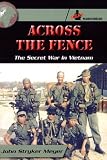
According to the book description of
On the Ground the Secret War in Vietnam, “During the Vietnam War, a "secret war"
was fought across the fence in Laos, Cambodia and North Vietnam, unknown to the media or the public, under the aegis of the
Military Assistance Command Vietnam's top secret Studies and Observation Group. SOG's chain of command for missions and after-action
reports extended to the White House and the Joint Chiefs of Staff.”
One reader of Across The
Fence: The Secret War In Vietnam said, “Anyone interested in the Vietnam War in general, and the secret
war in particular, will appreciate this well-written narrative of a SOG warrior's first tour of duty at FOB 1, the Phu Bai
launch site for what would eventually be known as CCN. The author, whose nickname "Tilt" comes from his days as
a youngster playing pinball machines in Trenton, New Jersey, is an educated, skilled writer who has taken what others might
recite as cold facts and woven a taut, suspenseful series of episodes from one of the deadliest years in the history of the
Studies and Observation Group. The history of this war will not be told by one book, but Tilt has added an important piece
to what one day will be a total picture of the Second Indochina War.
The book opens with Tilt's arrival
in country and his journey to Phu Bai, where he lands just in time to witness the disappearance of Spike Team Idaho into the
maws of the North Vietnamese Army in Laos. As he checks in, gets his gear, and becomes familiar with the small camp, the tension
builds as continued silence from the field signals the worst possible fate for the veterans on ST Idaho. The gravity of the
situation, both for the missing team and for the Bright Light team that is given the duty to go back in to see what happened,
is palpable. The events which follow and the inescapable conclusion reached by the team leader of the Bright Light leave no
doubt in the mind of the young Green Beret that he has joined a dangerous outfit - just as the folks back at Training Group
warned him. Regardless of his realization, the fact that he confronts his mortality and chooses to go on is testament to his
courage, a courage which will be needed in spades as he begins his seasoning in earnest.
As he undertakes his first missions,
and as close calls get closer and closer, Tilt witnesses (and the reader experiences with him) men under stress who react
in expected, and quietly respected, ways. It is no shame for a recon man to pull himself off a team after a particularly dangerous
mission where the reaper's scythe has missed him by centimeters. A couple of examples of extraordinary courage under fire
by team members followed by their decision to leave the team humanize the stories, since the reader must wonder, "What
would I do under similar circumstances?" It is this aspect of the book which gives it a richness which is often lacking
in war memoirs. In one particularly chilling example (especially for anyone who ever rode out on a "string") involves
Tilt's extrication from a hot insertion point in which he is forced to use a Swiss seat. Because of the stress of the situation,
he fails to secure his second D ring and as soon as the helicopter takes off, Tilt begins to . . . well . . . tilt. Not humorous
at all to be dangling upside down from 4,000 feet as your Swiss seat begins to make its way off your waist, down your hips,
down your knees . . . . My hands were dripping with sweat as he related this event.
|
|
 |
|
Although the majority of his missions
were into the Prairie Fire AO, his team volunteers to go south for a few missions into the Daniel Boone AO as a result of
a special request from Saigon. Those of us who served in the mountains of I Corps always thought the guys who served in the
lowlands had it easy -no lung-bursting humps up the mountains. Well, Tilt and his guys had the same idea, until they realized
that flat also meant not much cover or concealment. Lucky for them that the Green Hornets of the U.S. Air Force 20th Special
Operations Squadron were always nearby, since these flatland missions were literally "hit and run."
One aspect of the book which the reader
will come to appreciate is Tilt's honest respect and admiration for the Vietnamese members of his team and for the courageous
Vietnamese pilots of the 219th Special Operations Squadron, RVNAF, who time after time came into hot LZ's to pull RT Idaho
out of death's grip. These old Kingbees with their outdated Browning .30 caliber machine guns hanging out the side were often
the only reason teams made it out of Laos. To characterize the pilots who flew these missions as "cool under fire"
is an understatement. A funny anecdote with a Marine corps "Scarface" pilot underscores the danger all of these
pilots faced when picking up a recon team from Laos: the officer complains to Tilt that every time his helicopter picks up
a team, it gets all shot up. Not that he minds picking them up, just that it takes him off the flight line while getting repairs!
This book belongs in the library of
any serious student of the war. It gives added depth and understanding to the mission of SOG, and more importantly, of the
men who were charged with this thankless mission. It may have taken over thirty years for these stories to come out, but what
is important is that they are coming out and being recorded so that the protected will begin to know and more importantly,
never forget.
|
|
|
|
|